
You can spend a week on the Tuscan coast without a car. You cannot see all of Tuscany without one. The useful decision is not "car or no car" but "which days need a car, and which days are better on foot". This guide sets out how a car-free stay works around Castiglioncello, and where the limits are.
Arriving without a car
By train. Castiglioncello has its own station on the Tyrrhenian line, with regional trains along the coast towards Pisa, Livorno, Cecina and Grosseto. The station is in the village. From Pisa Centrale, take a coastal service south; from Livorno, the same line. Timetables change, so check Trenitalia for your date rather than relying on a page written months earlier.
By plane. Pisa Airport is connected to Pisa Centrale by the PisaMover shuttle, and from there the train continues along the coast. Florence Airport is further inland and requires a train into Florence first. Rome is a longer rail journey north. If you are arriving with luggage and children, a private transfer is often the calmer choice.
By private transfer. The house's private driver service publishes Pisa Airport at €145 and Livorno Station at €70 per vehicle, with a van for up to seven guests; local transfers start from €30. Those are the house's confirmed prices, not a general market rate. Tell the driver your flight or train number and keep them updated.
Getting around without a car
The village itself is walkable, but it is not flat. There are hills, steps and paths between the seafront, the pine woods and the station. Comfortable shoes matter more than a timetable.
Regional trains are the backbone of a car-free week: Livorno for a city day, Pisa for the monuments, Cecina for the market and the hinterland, Grosseto for the Maremma. Local buses fill the gaps, but routes and seasonal timetables change; ask at the station or at the house when you arrive.
Taxis exist but are not plentiful in a small village. Book ahead for dinners, early trains and returns after dark. A driver for a specific day is often more reliable than hoping for a taxi at the end of an evening.
The days that work without a car
- The village: beaches, pine woods, the Castello Pasquini, shops, cafés and the seafront. A full day, no transport.
- Livorno: a train ride and a city day. The port, the Terrazza Mascagni, the Venezia district and a fish lunch.
- Pisa: a train ride and the Piazza dei Miracoli. Go early; the afternoon belongs to the crowds.
- The sea: a boat, kayak or paddleboard from the coast. The boat guide explains the options.
- Elba: train to Piombino, then the ferry. This is a full day at best, and better as an overnight.
The days that need a car or a driver
Bolgheri and the wine estates are the clearest case. Visits are by appointment, the estates are spread out, and tasting means someone else should drive. The Bolgheri guide explains how to choose two or three estates; the driver service handles the rest.
The same applies to the hill towns — Volterra, San Gimignano, the Chianti hills — and to the Maremma parks. Trains reach the main towns, but the last stretch is often a bus or a taxi that may not exist when you need it. If those days are the centre of your trip, take a car for two or three days rather than every day.
A hybrid week, which is usually the best answer
Arrive by train or transfer. Spend the first two days on foot. Take a driver for the wine day. Use the train for Livorno or Pisa. Keep one day for a boat. If you want the hill towns, hire a car for a single day and return it in the evening. You get the freedom without spending the week in a car park.
For the shape of the week, the seven-day itinerary puts these days in order. For the village itself, the Castiglioncello guide explains what is within walking distance.
At the house
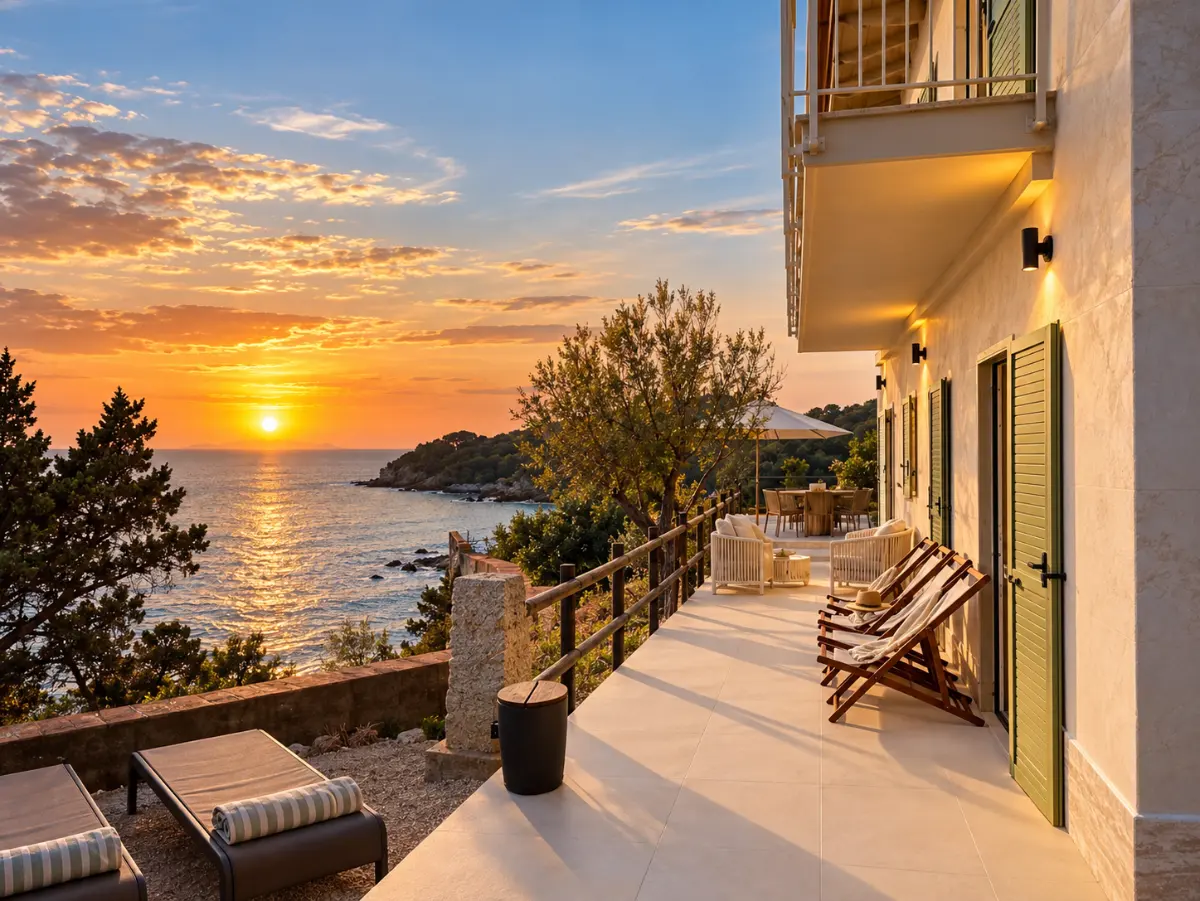
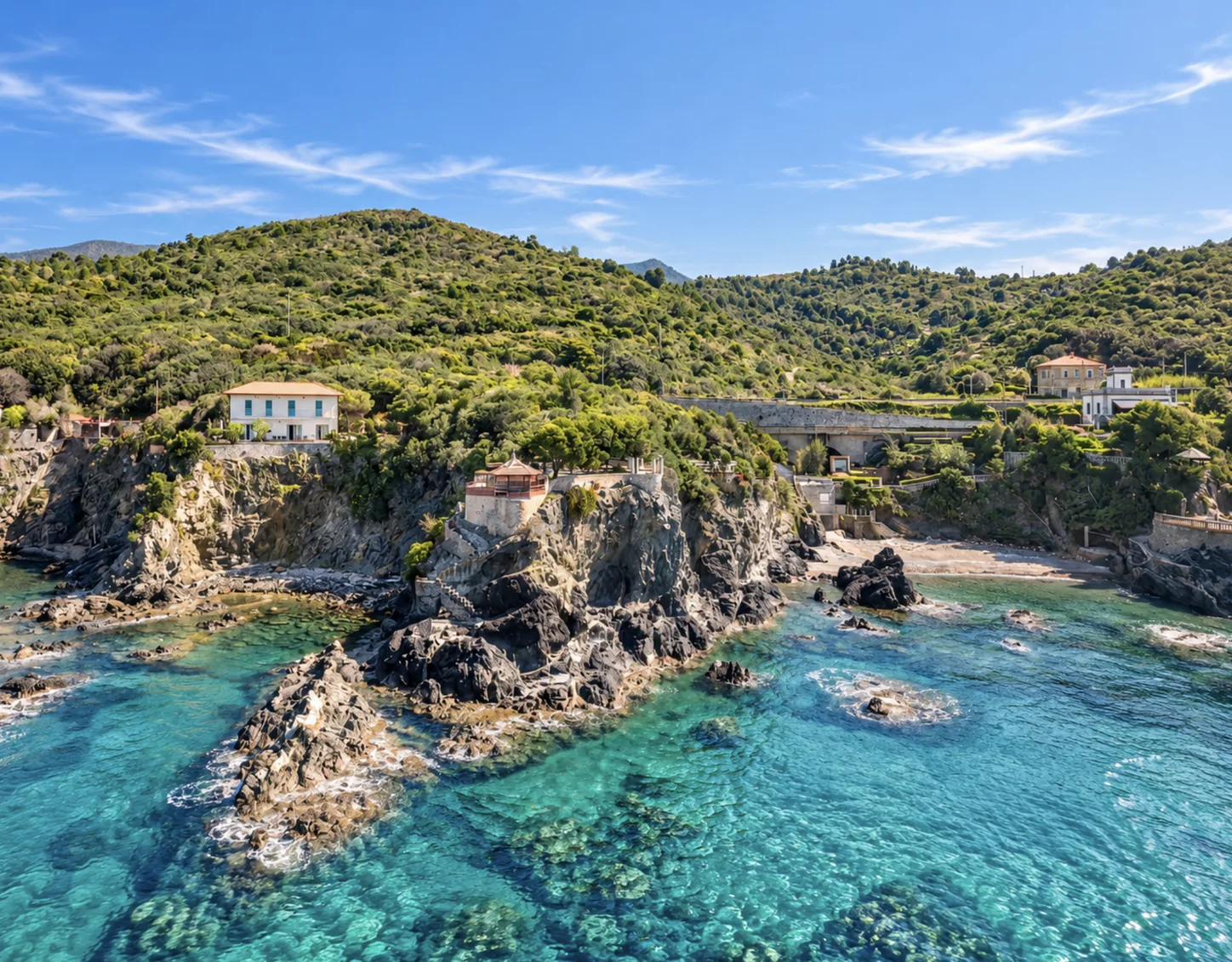
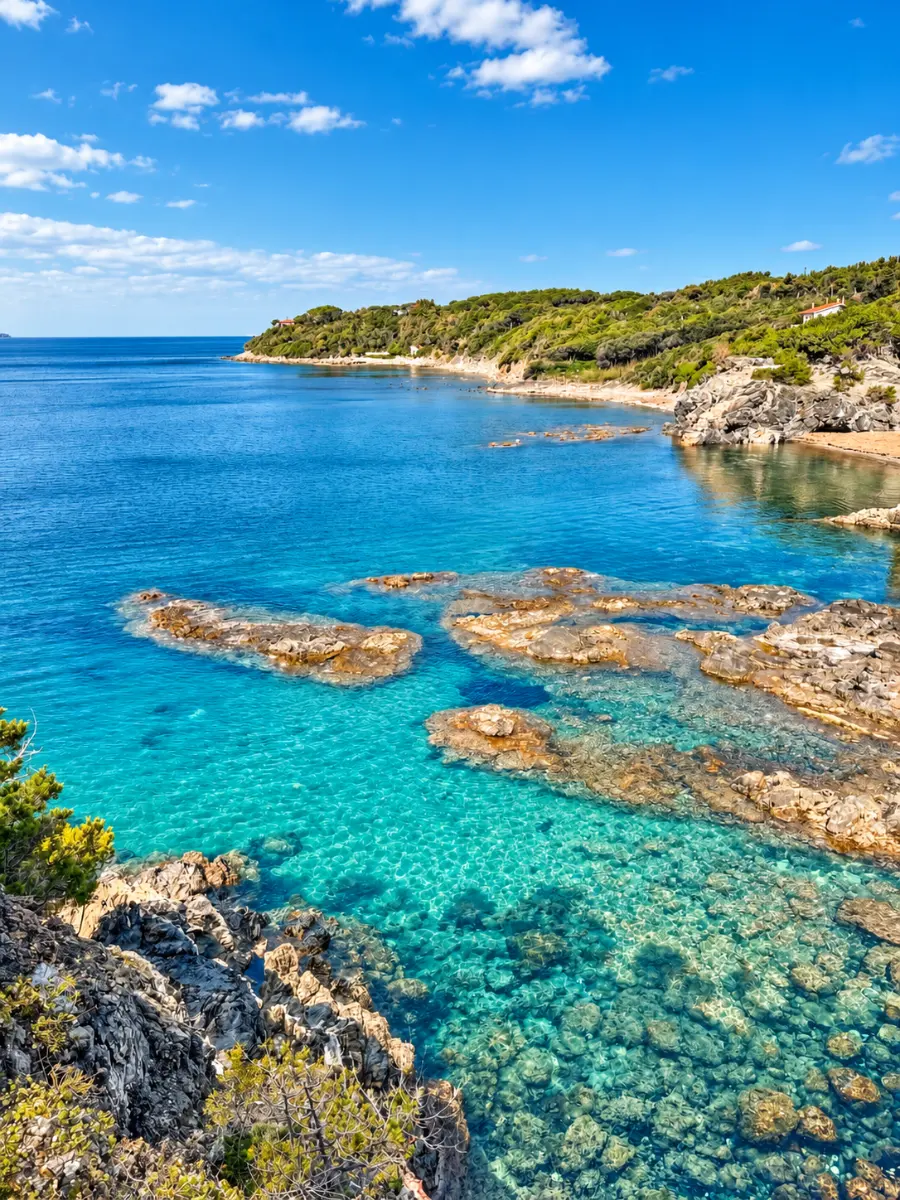
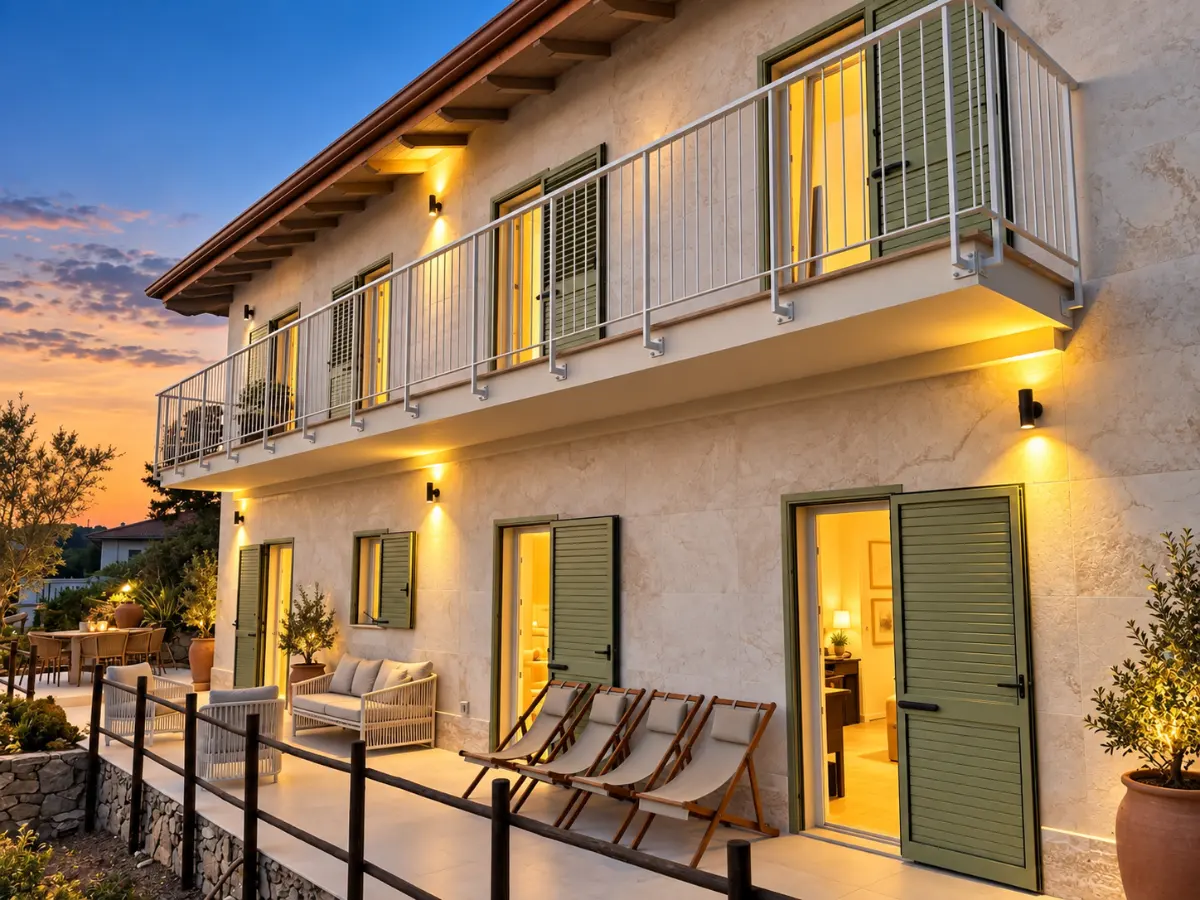
Roc Villa Bay has two private accesses to the sea on foot: a sandy beach by a private path and a rocky cove by stone steps. That means the sea does not require a car. The village is in Castiglioncello, and the house is on Via Aurelia 1111. We do not publish walking times, because they depend on the path, the heat and the guest; tell us what you need and we will be specific.
If you are arriving without a car, say so when you enquire. We can confirm the transfer, the train station and what is open in the village for your dates. The enquiry form is the place to start.
Questions
Good to know
Does Castiglioncello have a train station?
Yes. Castiglioncello has its own station on the Tyrrhenian line, with regional trains along the coast towards Pisa, Livorno, Cecina and Grosseto. Check Trenitalia for your date.
How do you get from Pisa Airport to Castiglioncello?
Take the PisaMover shuttle to Pisa Centrale and a coastal train south, or book a private transfer. The house's driver service publishes Pisa Airport at €145 per vehicle.
Can you reach the sea on foot from Roc Villa Bay?
Yes. The house has two private accesses to the sea: a sandy beach by a private path and a rocky cove by stone steps.
Do you need a car for Bolgheri?
Yes, or a driver. The estates are spread out, visits are by appointment, and tasting means someone else should drive.
Are taxis easy to find in Castiglioncello?
They exist but are not plentiful in a small village. Book ahead for dinners, early trains and returns after dark.
Is the village flat?
No. There are hills, steps and paths between the seafront, the pine woods and the station. Comfortable shoes matter.
Stay at Roc Villa Bay
A private house
by the sea
Four bedrooms, three private units, more than 4,000 m² of Mediterranean garden and two private accesses to the sea in Castiglioncello.