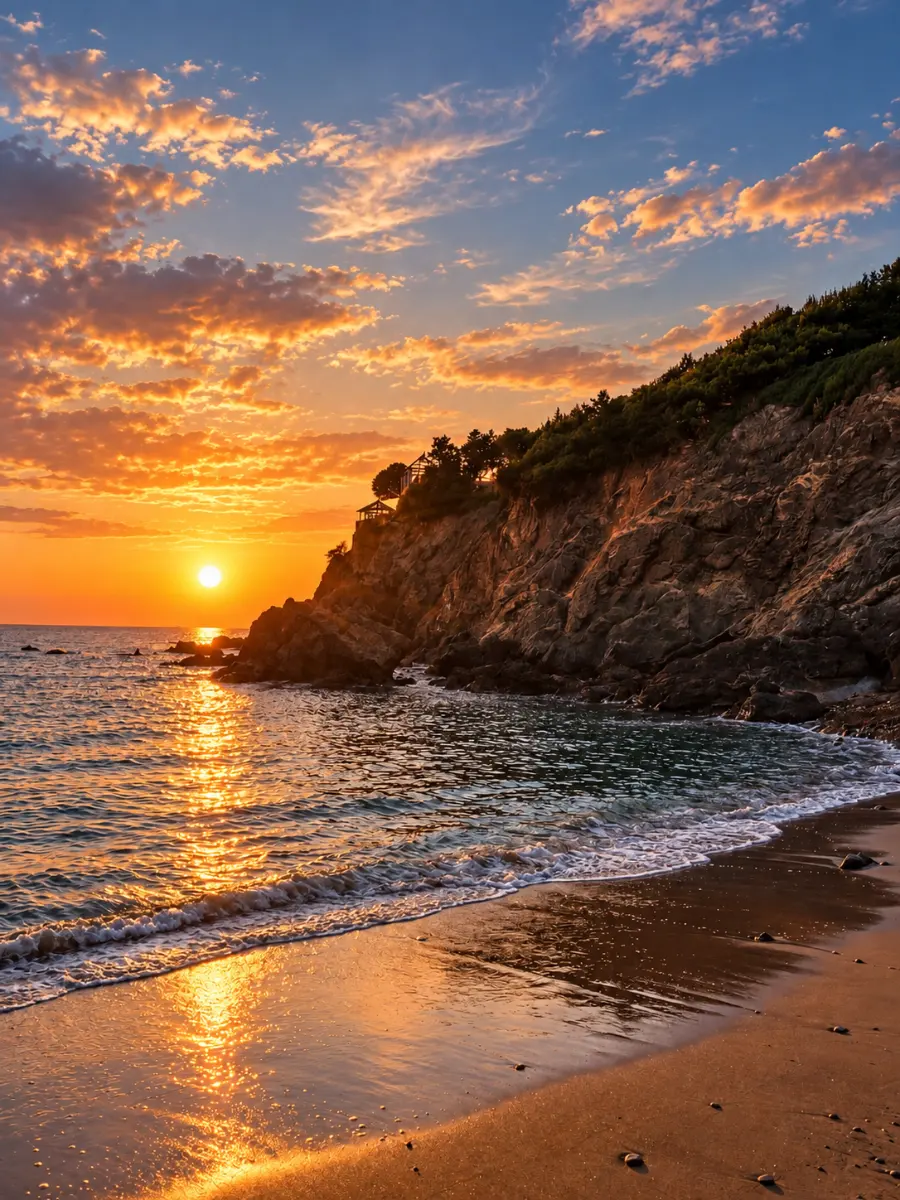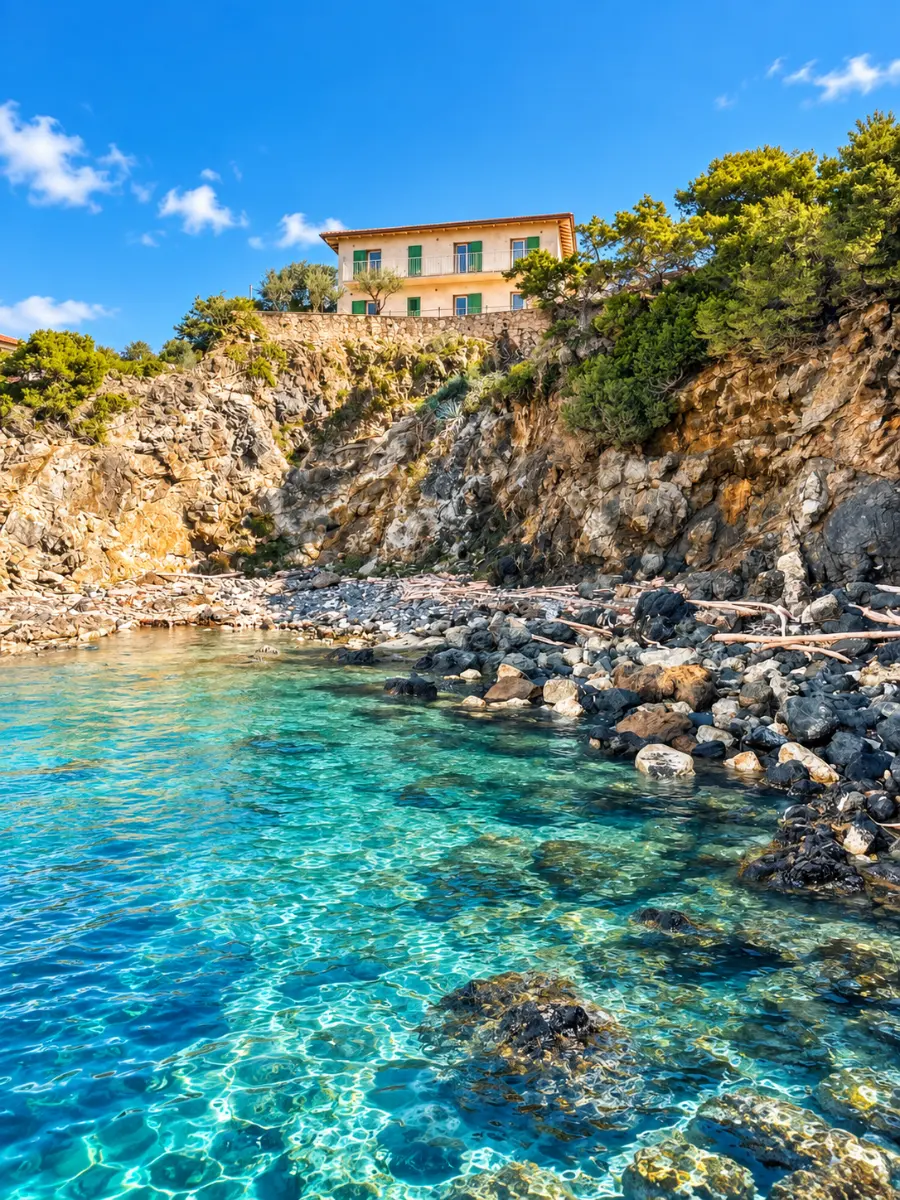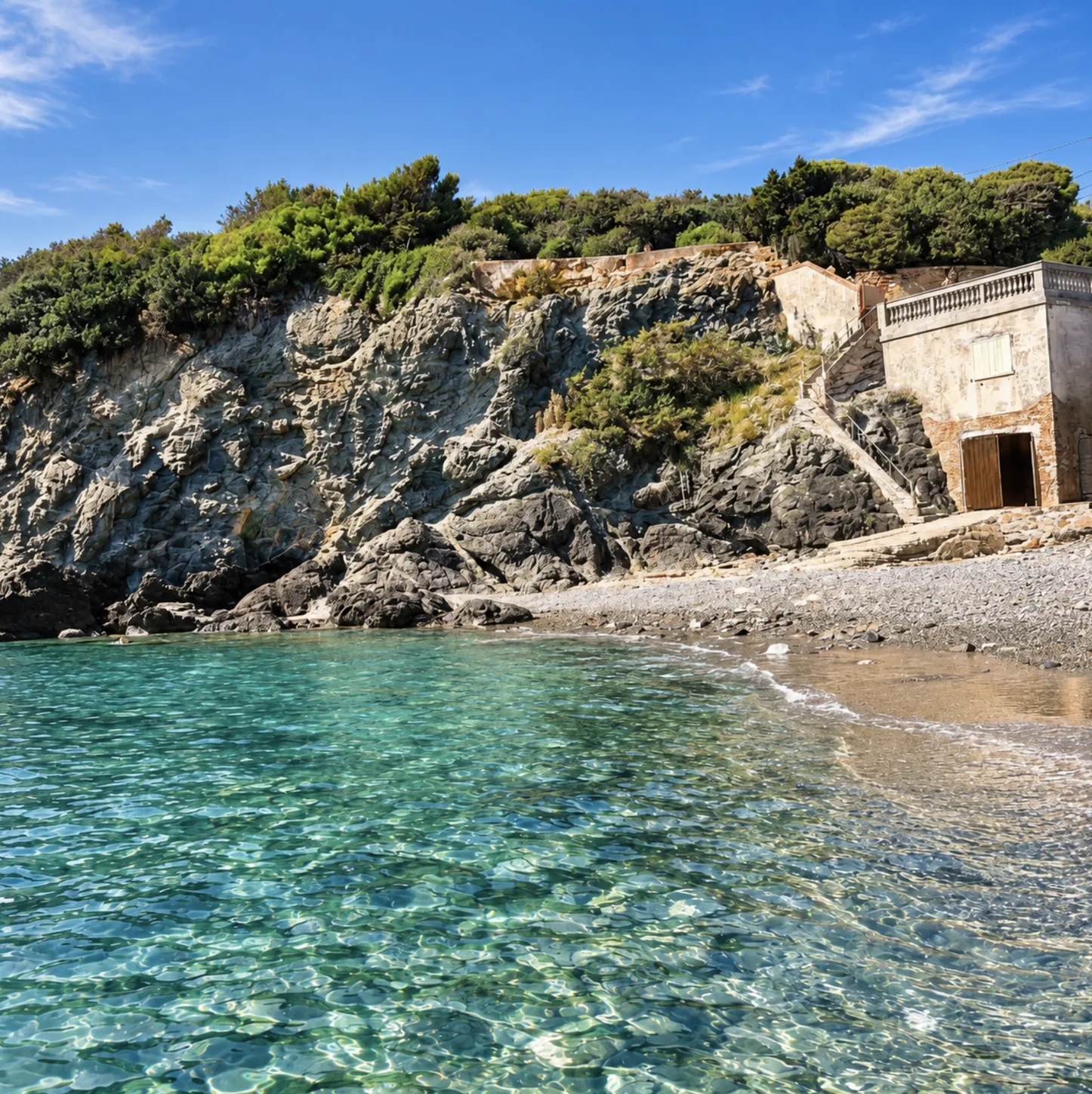

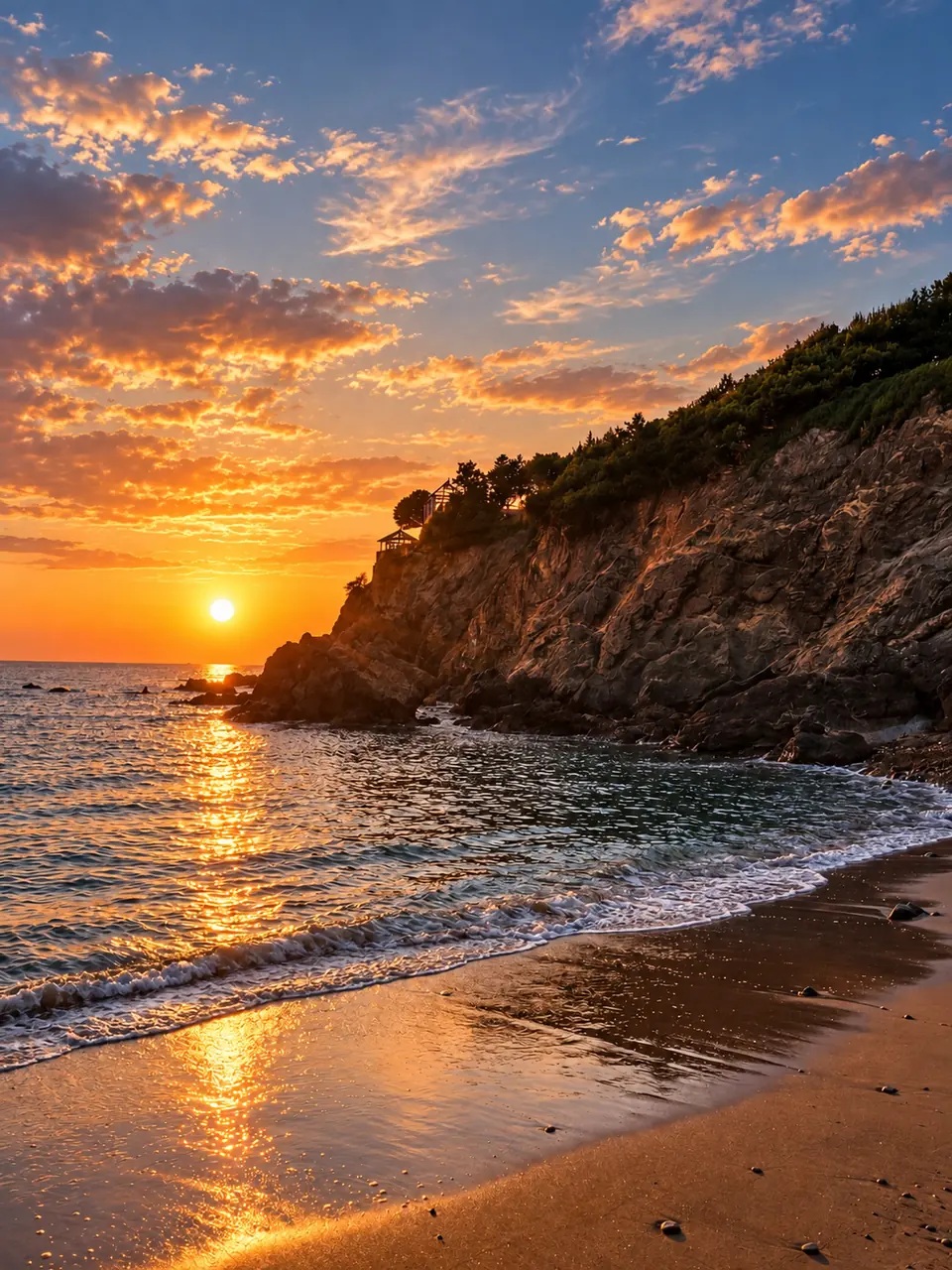
Tuscany has more coastline than most visitors expect. It runs from the wide, social sands of Versilia in the north, through the headlands and small bays of the Livorno coast, to the long, wind-shaped Maremma in the south, and then out to the islands of the Tuscan Archipelago. The beaches are not variations on one theme. They are different kinds of shore, and the right one depends on the day you are having.
This is a guide to choosing, not a ranking. We do not publish blue flags, lifeguard cover, prices or distances, because those change and because a list that pretends to be complete is usually wrong.
How to read a Tuscan beach
- Sand, pebble or rock. Sand is easier for lying down and for small children; pebble and rock give clearer water and better snorkelling. This coast alternates between all three within a few hundred metres.
- Free or concession. A spiaggia libera is free and unserviced. A beach club holds a concession and sells umbrellas, sunbeds and services. The shore itself remains public; what you pay for is the service.
- Shelter and wind. A bay that is calm in the morning can be choppy in the afternoon. Locals move between bays with the wind, and so should you.
- Entry to the water. A shallow sandy shelf is not the same as a rocky edge or a sudden drop. Ask before you dive in with children.
- Access. Some beaches are beside the road; others are at the end of a path or a flight of steps. The walk is part of the choice.
Versilia: the wide, social north
Versilia is the polished version of the Tuscan coast: long sandy beaches, a promenade, beach clubs with a long tradition, and towns such as Viareggio, Forte dei Marmi and Marina di Pietrasanta. It is social, built-up and convenient. In high season it is also busy, and the beach clubs are booked well in advance.
Choose Versilia if you want a town centre, a promenade, shops and the rituals of an Italian seaside summer. Do not choose it if you are looking for a quiet cove reached by a path. The villas near Viareggio and villas near Forte dei Marmi pages explain the difference honestly, including the fact that Roc Villa Bay is not there.
The Etruscan Riviera: small bays and pine woods
The Livorno coast, known as the Etruscan Riviera, is a sequence of headlands, pine woods and small bays. Around Castiglioncello the best-known shores are the Baia del Quercetano, Le Forbici, Santa Lucia, L'Arancio and Fortullino. Some are sandy, some pebbly, some rocky. Some are reached by a short path or a flight of steps.
The Quercetano is the largest and most enclosed, with the village above it; it is the beach most visitors meet first and the busiest in August. Le Forbici is smaller and rockier, with clear water close to the edge. Santa Lucia is a compact bay best approached as a swimming place. L'Arancio and Fortullino are quieter, at the southern edge of the village's coastline. The Castiglioncello beaches guide describes each one; the Santa Lucia guide follows a single day there.
Baratti and Populonia: the gulf below the Etruscans
South of Castiglioncello, the Gulf of Baratti opens below the headland of Populonia. It is one of the most distinctive stretches of the Tuscan coast: a sheltered gulf, a long shore, and an archaeological park above it preserving the remains of an Etruscan city and its necropolis. The combination of sea and archaeology is rare, and it rewards an early arrival rather than an afternoon stop.
The gulf is also a reminder that this coast has been inhabited for a very long time. Do not treat the archaeology as scenery; check the opening arrangements of the park before you plan the day.
The Maremma: long shores and wilder land
Further south, the Maremma is wider, greener behind the sand and less built-up. The Parco della Maremma, near Alberese, protects a stretch of coast and wetland where access is regulated and the beach is reached on foot or by park transport. Elsewhere there are long public shores, pine woods and dunes. This is not the coast for a quick dip between shops; it is the coast for a day out with water, shade and walking.
Access rules, parking and seasonal arrangements change. Ask locally, or ask us when you are staying. The walking and cycling guide is useful if you want to combine the coast with the hinterland.
The islands: Elba and the archipelago
Elba is the largest island of the Tuscan Archipelago, with sandy bays, granite rocks and a landscape that changes from beach to hill within a short drive. The other islands — Capraia, Giglio, Giannutri, Montecristo, Gorgona and Pianosa — are different again, and some are protected or accessible only in limited ways. This is a different holiday, reached by ferry, not a day at the beach from the mainland.
If the island is the point of the trip, stay there. If you are based on the coast, the boat guide explains how to see the archipelago without pretending it is a quick excursion.
A beach for each kind of day
- With small children: a sandy bay with a shallow entry and shade nearby. Ask about the bottom and the currents, not just the view.
- For snorkelling: a rocky edge with clear water, shoes for the rocks and a calm sea.
- For a social day: Versilia, a beach club, a promenade and a long lunch.
- For quiet: a small bay reached on foot, early in the morning or after five.
- For a walk: the pine woods and the coastal paths, with a swim at the end.
- For archaeology: Baratti and Populonia, with the park above the gulf.
Roc Villa Bay's two shores
Roc Villa Bay has two private accesses to the sea: a sandy beach reached by a private path and a rocky cove reached by stone steps. The sandy beach is the easier choice for children and for a long afternoon. The cove is the more secret one, with clear water and rock entry, and it needs an adult and confident swimmers.
Neither is a beach club. There is no lifeguard, no beach bar and no sunbed service. It is a shore reached from the house, not a resort. The private bay guide and the guide to private access explain what that means in plain language.
Staying by the sea
Roc Villa Bay is in Castiglioncello, a frazione of Rosignano Marittimo in the province of Livorno. It has four bedrooms, three private units and more than 4,000 m² of Mediterranean garden. If you want a beach holiday with the sea at the end of the garden, the villa page is the place to start; if you want to compare the coast with other Italian shores, read Tuscan coast or Amalfi and Tuscan coast or Sardinia.
Questions
Good to know
Which Tuscan beach is best for families?
A sandy bay with a shallow entry and shade nearby. Ask about the bottom and the currents rather than trusting a photograph. The sandy beach at Roc Villa Bay is reached by a private path and is the easier of the house's two accesses.
Are there free beaches on the Tuscan coast?
Yes. A spiaggia libera is free and unserviced; you bring shade, water and a mat and take everything away. Beach clubs hold a concession on other stretches and sell umbrellas and sunbeds.
Can you swim from Roc Villa Bay?
Yes. The house has two private accesses: a sandy beach by a private path and a rocky cove by stone steps. There is no lifeguard, bar or sunbed service; it is a shore, not a beach club.
Is Elba a day trip from the Tuscan coast?
It can be done as a long day, but it is better as an overnight. Elba is the largest island of the Tuscan Archipelago and deserves more than a ferry and a beach.
Why do you not rank the beaches?
Because a ranking would pretend to measure things that depend on the day, the wind, the season and the guest. We describe the geography and let you choose.
Stay at Roc Villa Bay
A private house
by the sea
Four bedrooms, three private units, more than 4,000 m² of Mediterranean garden and two private accesses to the sea in Castiglioncello.