
The Amalfi Coast and the Tuscan coast are both famous, both Italian, and both beside the Tyrrhenian Sea. They are also almost opposite in the kind of holiday they give you. Amalfi is vertical, dramatic and dense: towns stacked above the water, a single winding road, steps instead of streets. The Tuscan coast is horizontal and varied: long beaches in the north, small bays and pine woods in the middle, wide shores and wetlands in the south.
This is a comparison, not a verdict. The right coast depends on the holiday you want.
Geography and the shape of the day
The Amalfi Coast is in Campania, in the province of Salerno: Positano, Amalfi and Ravello are the best-known towns, connected by the Strada Statale 163 Amalfitana and by ferries. The road is narrow and slow, the towns are built into the cliffs, and the sea is usually reached by steps or by boat. The drama is the point, and so is the effort.
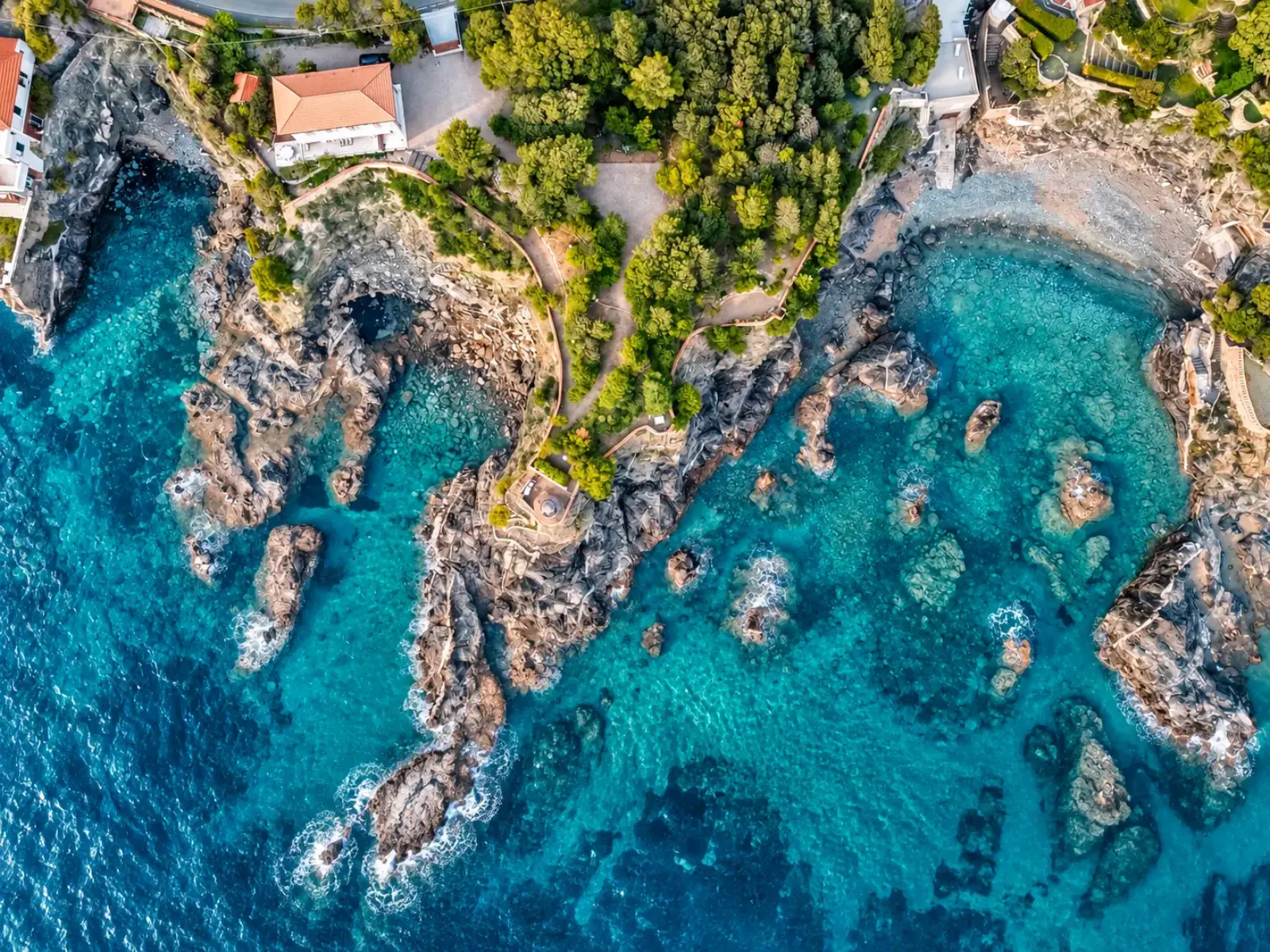
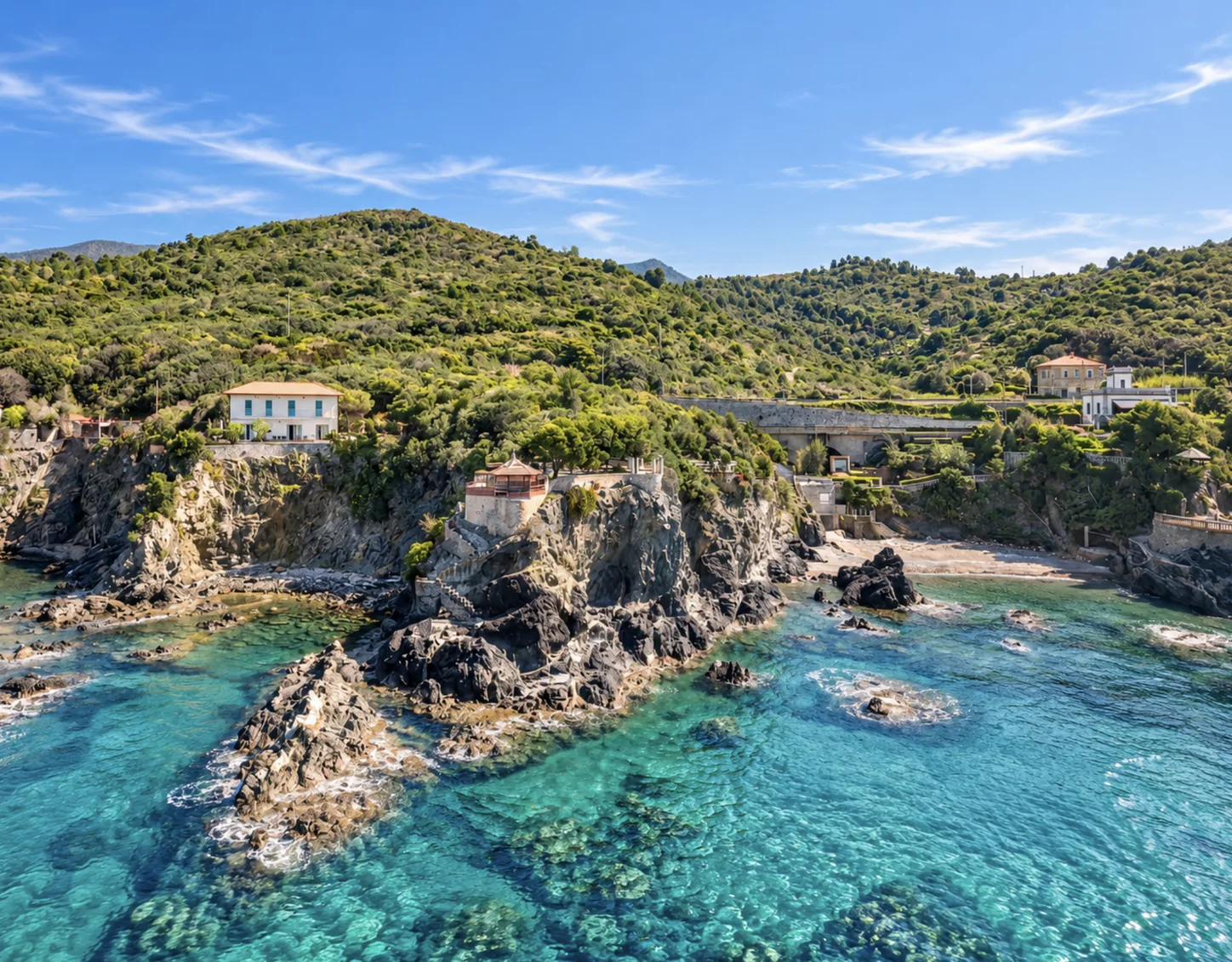
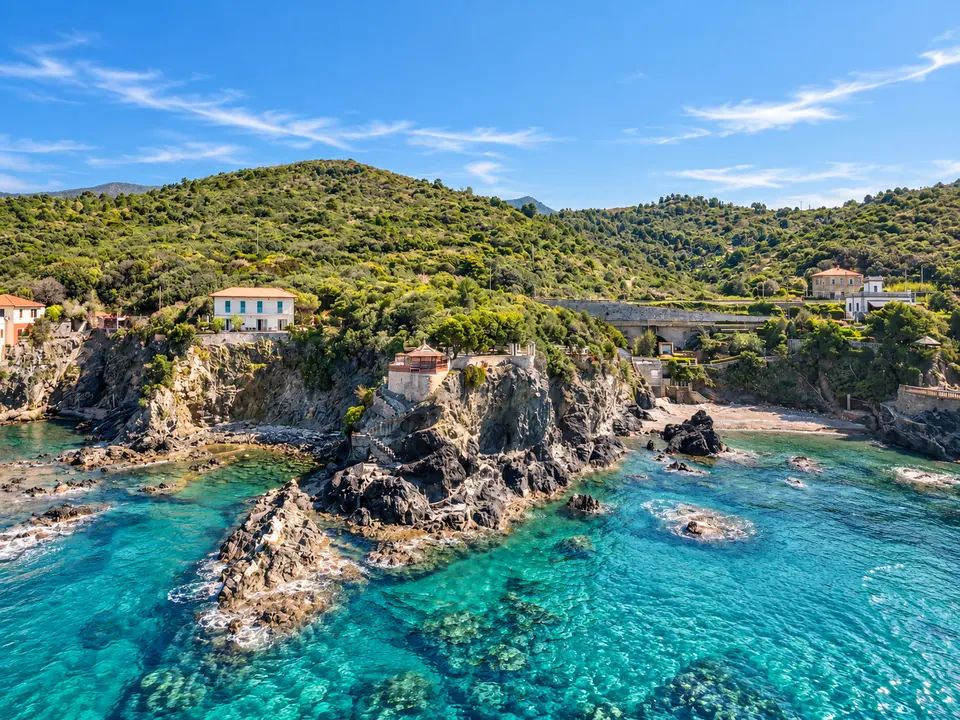
The Tuscan coast runs from Versilia in the north through the Livorno coast to the Maremma in the south, with the islands of the Tuscan Archipelago offshore. Castiglioncello, where Roc Villa Bay stands, is in the middle stretch: a village on a pine-covered promontory, with small bays and a station on the Tyrrhenian line. The coast is easier to move along, and the villages are more ordinary in the best sense.
Beaches and the sea
Amalfi's beaches are mostly small, pebbly or rocky, often attached to a beach club, and often reached by steps. The water is deep and clear, and the boat is the best way to see the coast. For a beach-first family holiday, it is not the easiest choice.
Tuscany offers more variety. Versilia has wide sand and large beach clubs. The Etruscan Riviera has small sandy and rocky bays. The Maremma has long, wilder shores. Elba adds island beaches and granite. If you want to swim every day from a shore you can walk to, Tuscany has more options.
Space, privacy and where you sleep
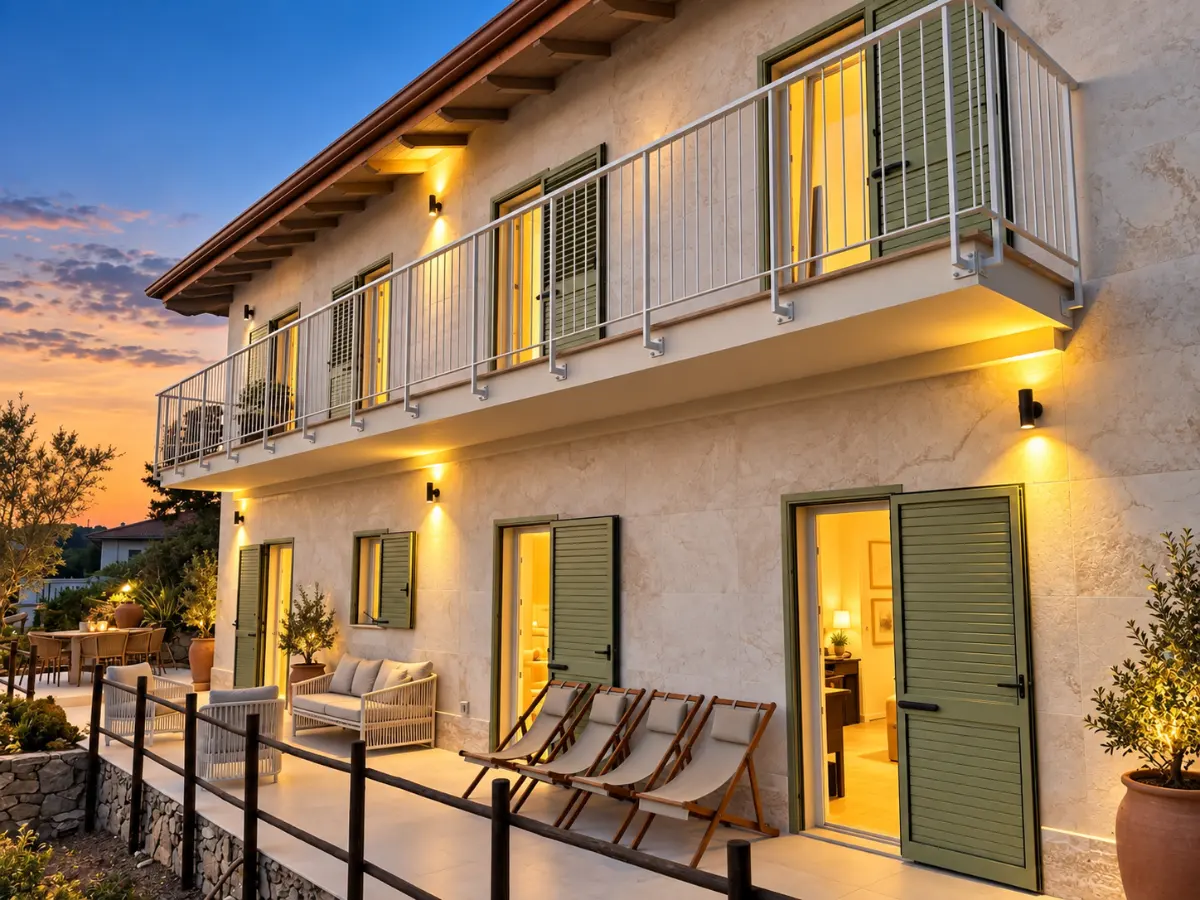
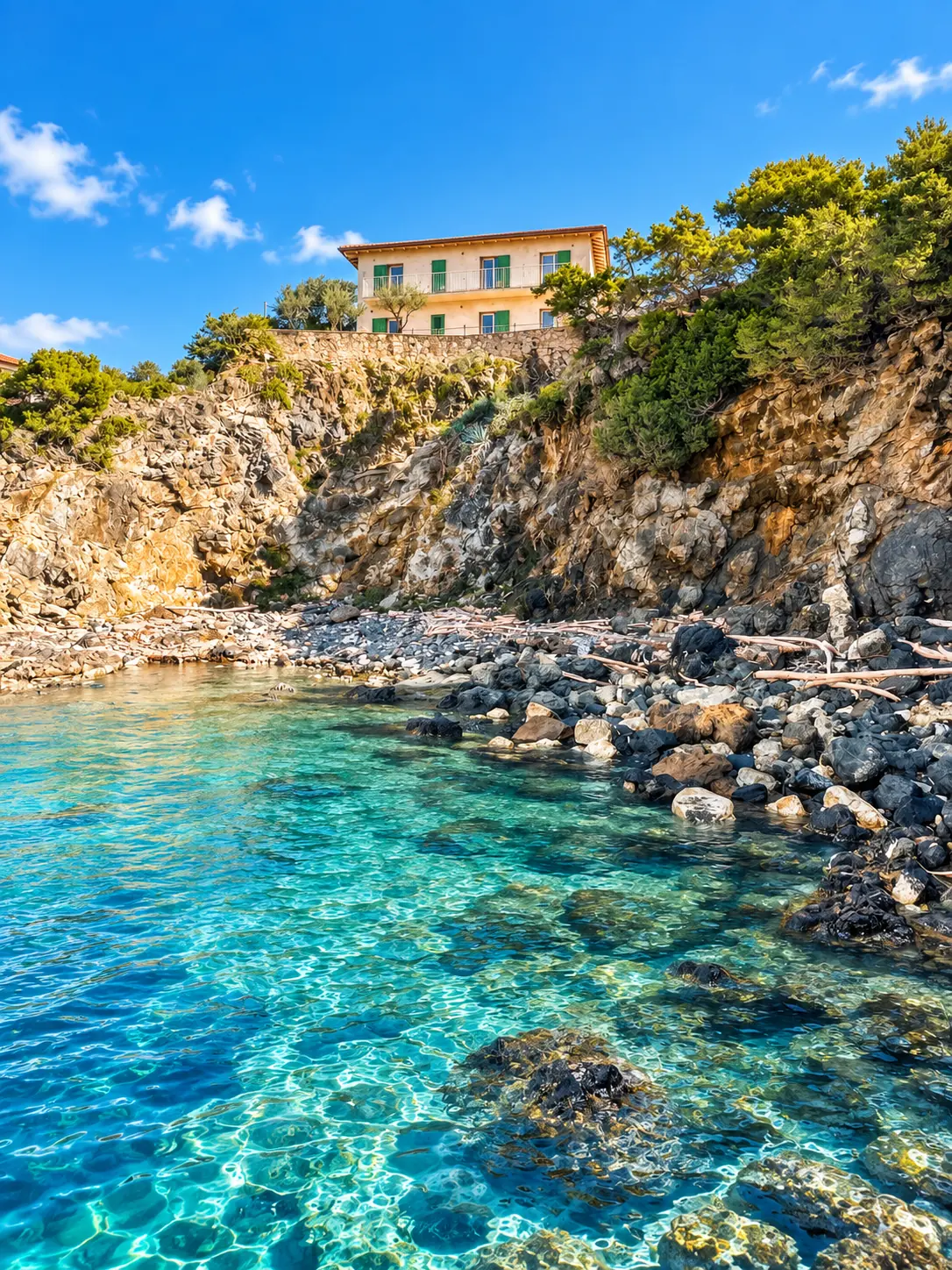
Amalfi's hotels and villas are often spectacular but compact, and privacy can mean a terrace rather than a garden. Tuscany has more room: villas with gardens, olive groves, pine woods and space between the house and the sea. Roc Villa Bay, for example, has more than 4,000 m² of Mediterranean garden and two private accesses to the sea; the villa page describes it without embellishment.
If the fantasy is a room with a cliff view and a boat below, Amalfi does that better. If the fantasy is a garden, a table under the pines and a path to the water, Tuscany is the better fit.
Getting there and getting around
Amalfi is reached from Naples airport, then by car, bus or ferry. The coast road is famous for its views and for its traffic; a car is useful for the hills but not for the coast in high season. Ferries are often the sane way to move between towns.
Tuscany is reached from Pisa or Florence, with a coastal railway that runs through Castiglioncello and links Livorno, Cecina, Grosseto and Pisa. A car is useful for the hill towns and the wineries, but a coastal stay works without one. The car-free guide explains how.
Culture and food
Amalfi has the Duomo, Ravello's villas and gardens, the Path of the Gods, and a food culture of lemons, buffalo mozzarella, seafood and pasta. Tuscany has Pisa, Lucca, Florence, Siena, the Etruscan sites at Populonia and Baratti, Bolgheri and the Chianti hills. The two are not competing: they are different libraries.
On the plate, the Tuscan coast is olive oil, bread, beans, vegetables and fish, with cacciucco in Livorno and the wines of Bolgheri along the coast. The food guide goes into detail.
When to choose Amalfi
- You want the dramatic cliff scenery and the classic Amalfi postcard.
- You are happy to move by boat, bus or driver rather than by car.
- You want a short, intense stay in a famous place.
- You are travelling as a couple and the terrace is enough.
When to choose the Tuscan coast
- You want a garden, space and a shore you can walk to.
- You are travelling with children or a group and need room.
- You want to combine the sea with cities, wine and archaeology.
- You want a base for a week rather than a tour of towns.
- You want to arrive by train and use the coast without a car every day.
Where Roc Villa Bay fits
Roc Villa Bay is in Castiglioncello, in the province of Livorno, on the Etruscan Riviera. It is not on the Amalfi Coast, and we do not pretend otherwise. It is a private seafront house with four bedrooms, three private units, a large garden and two private accesses to the sea. If you are choosing between the two coasts, tell us what you want from the week and we will give you a straight answer, even if the answer is Amalfi.
For the other comparison, read Tuscan coast or Sardinia. For the wider choice of house, the luxury villas guide sets out the questions that matter.
Questions
Good to know
Which is better for families, Tuscany or Amalfi?
Tuscany is generally easier for families: more sandy beaches, more space, and a coast that works without a car. Amalfi is dramatic but vertical, with steps and fewer easy beach days.
Is Castiglioncello on the Amalfi Coast?
No. Castiglioncello is in the province of Livorno, on the Etruscan Riviera in Tuscany. The Amalfi Coast is in Campania, in the province of Salerno.
Can you visit both coasts in one trip?
They are different trips. Naples and the Amalfi Coast are south of Rome; Tuscany is north. Trying to combine them in a week means spending much of it in transit.
Which coast has better beaches?
Tuscany has more variety: long sand in Versilia, small bays on the Etruscan Riviera, wide shores in the Maremma and the islands. Amalfi is mostly small, pebbly or rocky beaches, often reached by steps.
Which is easier without a car?
The Tuscan coast has a coastal railway through Castiglioncello, Livorno and Pisa. Amalfi is better served by ferries and buses than by train, and the coast road is slow in high season.
Stay at Roc Villa Bay
A private house
by the sea
Four bedrooms, three private units, more than 4,000 m² of Mediterranean garden and two private accesses to the sea in Castiglioncello.