
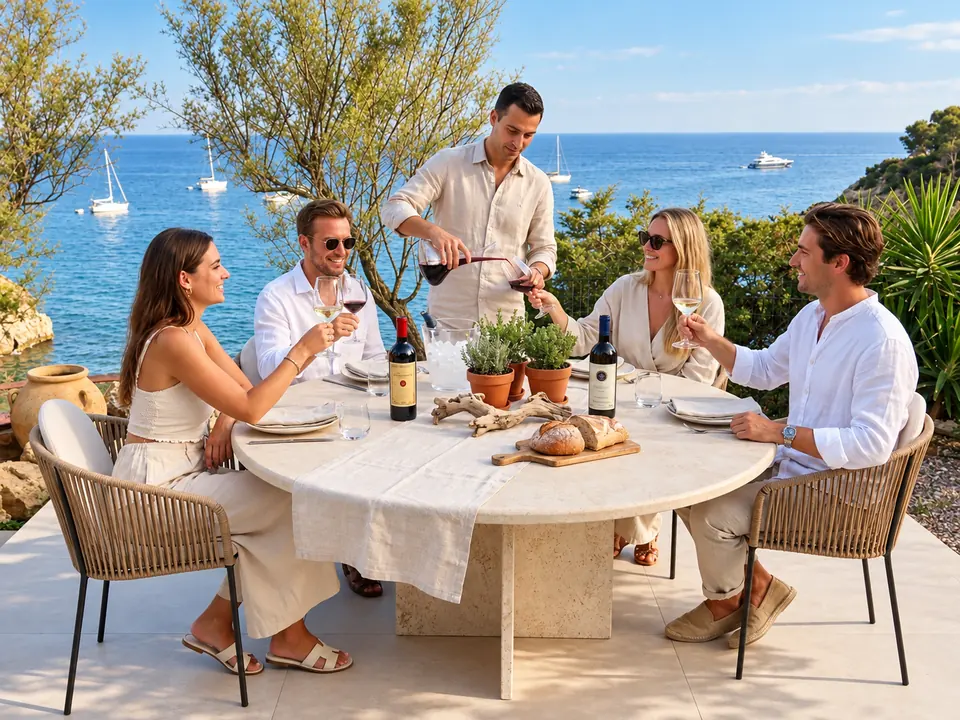
The Tuscan coast has become one of Italy's most interesting wine landscapes. Bolgheri is the famous name, but the story is wider: Bibbona has its own DOC, Suvereto has a DOCG and a cluster of estates around the Val di Cornia, and the Maremma has grown from a source of bulk wine into a serious appellation with international ambitions. Inland, Chianti Classico remains the historic heart of Sangiovese.
This page is the index. It explains the wine geography of the coast, links to the regional directories and the estates we cover in detail, and says plainly how visits work. We do not publish opening hours, prices or availability: those are set by each winery and change during the year.
The wine geography
The coast is not one terroir. The northern part, around Bolgheri and Bibbona, is a mix of coastal plain, low hills and marine sediments, with cool nights and a constant sea breeze. Further south, Suvereto and the Val di Cornia sit among the Metalliferous Hills, with higher sites and a more varied geology. The Maremma is wider and warmer, with large estates, wetlands and a long coast.
The grapes reflect that variety. Bolgheri is built mainly on Cabernet Sauvignon, Cabernet Franc, Merlot and Syrah, with Vermentino for the whites. Bibbona works with Sangiovese and international varieties under its own DOC. Suvereto blends Sangiovese with Bordeaux varieties. The Maremma uses Cabernet, Merlot, Syrah, Sangiovese and Vermentino across a broad range of styles.
The directories
- Bolgheri wineries — the village, the DOC and the complete roll of the Consorzio Bolgheri's member estates.
- Bibbona wineries — the producers based in the comune and the Terratico di Bibbona DOC.
- Castagneto Carducci wineries — the comune that contains Bolgheri, from the borgo to Donoratico.
- Suvereto wineries — Petra, Bulichella, Rubbia al Colle and the Val di Cornia.
- Maremma wineries — Le Mortelle, Rocca di Frassinello, Cacciagrande and the southern coast.
- Chianti Classico wineries — the historic Sangiovese zone between Florence and Siena.
The estates we cover in detail
These are the estates with a dedicated page: the wines, the place and how to approach a visit.
- Tenuta San Guido — the estate of Sassicaia.
- Ornellaia — founded in 1981, one of the names that made Bolgheri international.
- Tenuta Guado al Tasso — the Antinori family's Bolgheri estate.
- Tenuta Argentiera — a coastal estate at Donoratico.
- Tenuta di Biserno — Lodovico Antinori's estate in the comune of Bibbona.
- Grattamacco — one of the historic hillside estates.
- Le Macchiole — known for single-variety wines.
- Michele Satta — a family estate among the builders of modern Bolgheri.
- Podere Sapaio — a younger estate with a Bordeaux-inspired voice.
- Poggio al Tesoro — the Allegrini family's Bolgheri estate.
- Ca' Marcanda — the Gaja family's estate.
- Castello di Bolgheri — the estate that takes its name from the village castle.
- Campo alla Sughera — a Bolgheri estate known for Arnione.
- Tenuta Meraviglia — a small Bolgheri estate.
- Terre del Marchesato — a family estate in the heart of the zone.
- Aia Vecchia — a family-run estate with a broad range of Bolgheri wines.
- Chiappini — a family estate on Via Bolgherese, organic since 2010.
- Guado al Melo — the Scienza family's estate, with an underground winery and wine museum.
- Campo al Mare — the Folonari family's Bolgheri estate.
- Tenuta Sette Cieli — an organic estate on the hills between Bibbona and Castagneto.
- Petra — Mario Botta's winery at Suvereto.
- Fattoria Le Mortelle — the Antinori estate at Castiglione della Pescaia.
- Rocca di Frassinello — Renzo Piano's winery at Gavorrano.
How a visit works
Most estates receive visitors by appointment. Some offer a tour of the cellar and the vineyards; others a seated tasting; a few are not open to the public at all. The person who pours your wine may be the owner, the winemaker or a member of the family, depending on the size of the estate.
Write directly to the winery, say how many people you are, whether anyone is driving and what you would like to understand. Book early in spring, autumn and around harvest. The guide to winery visits goes into the practical detail.
Wine and the sea
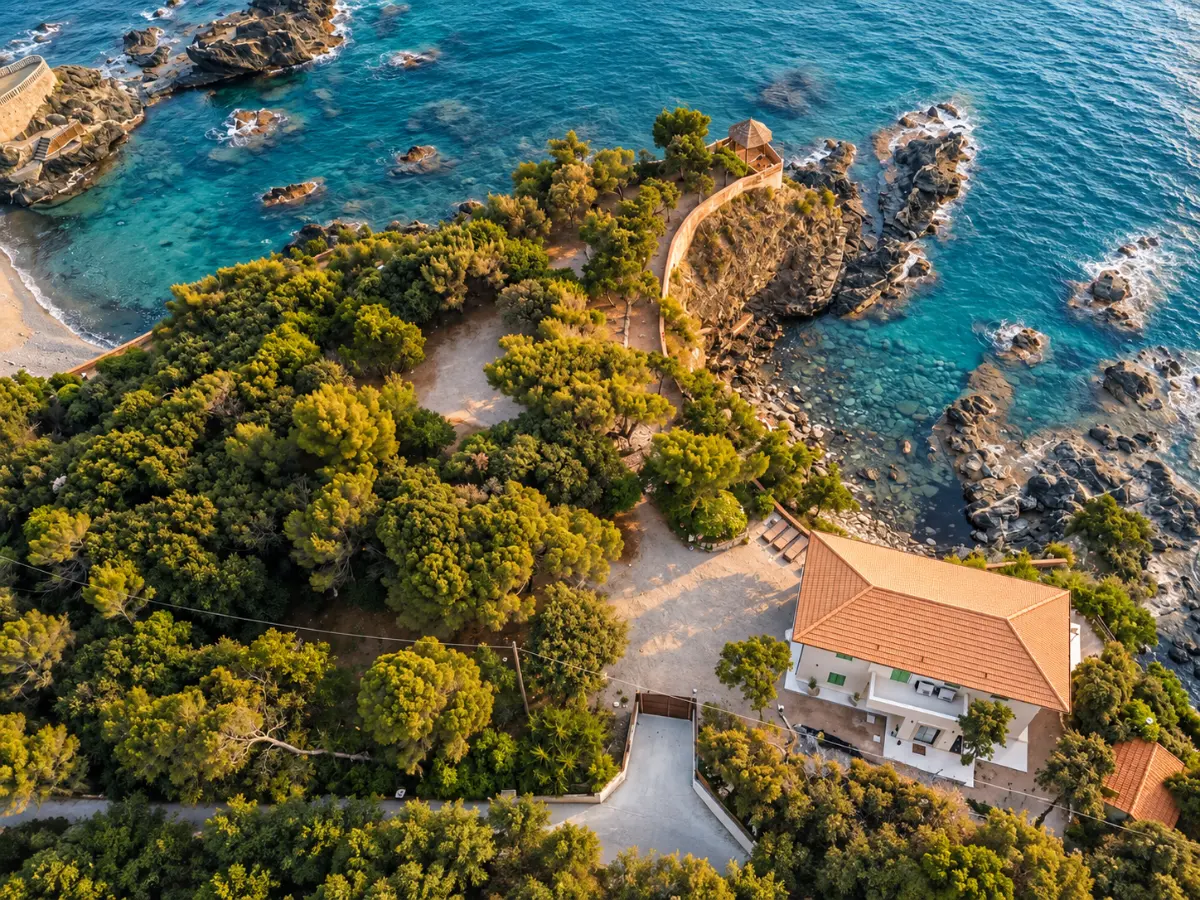
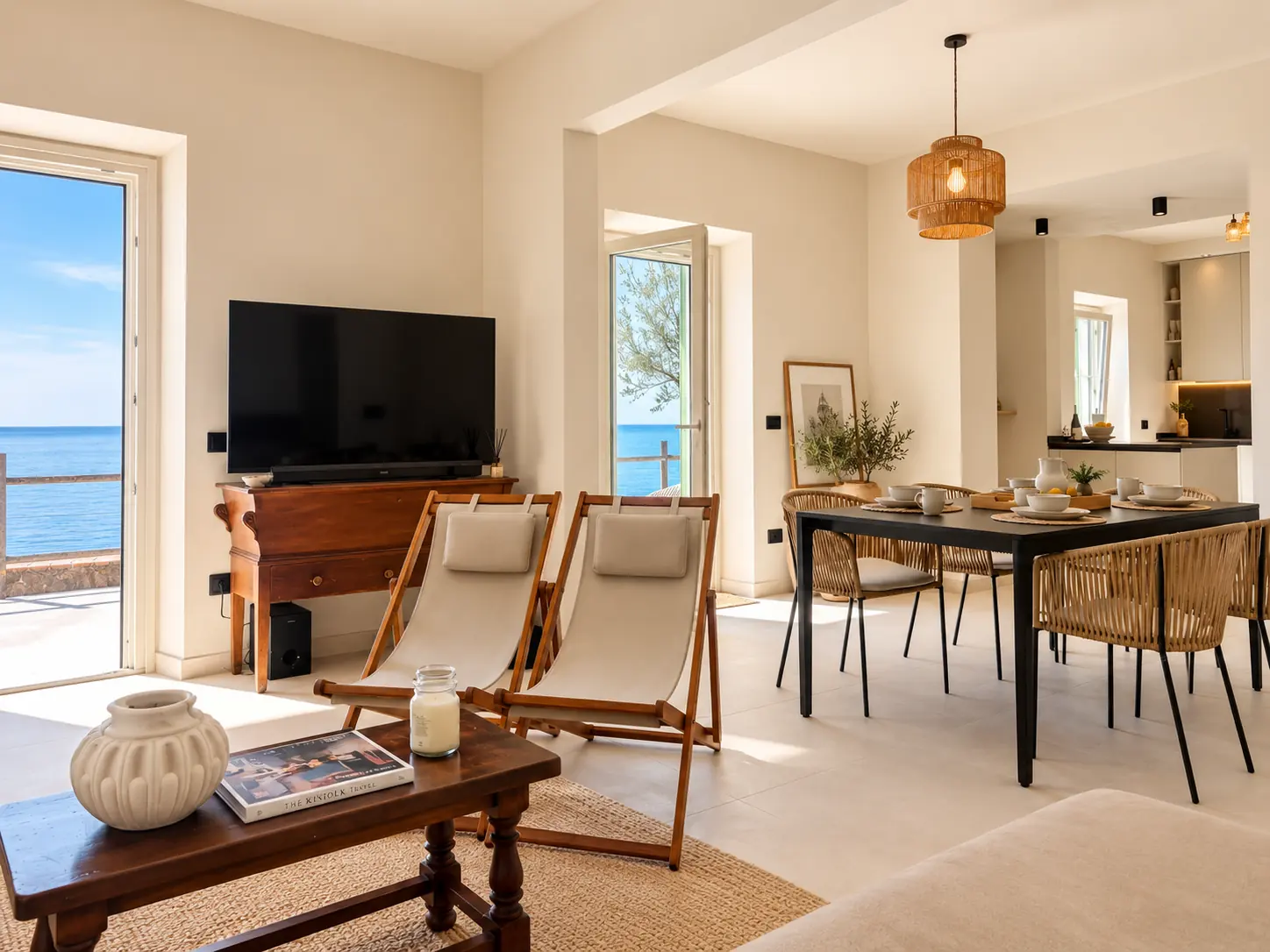
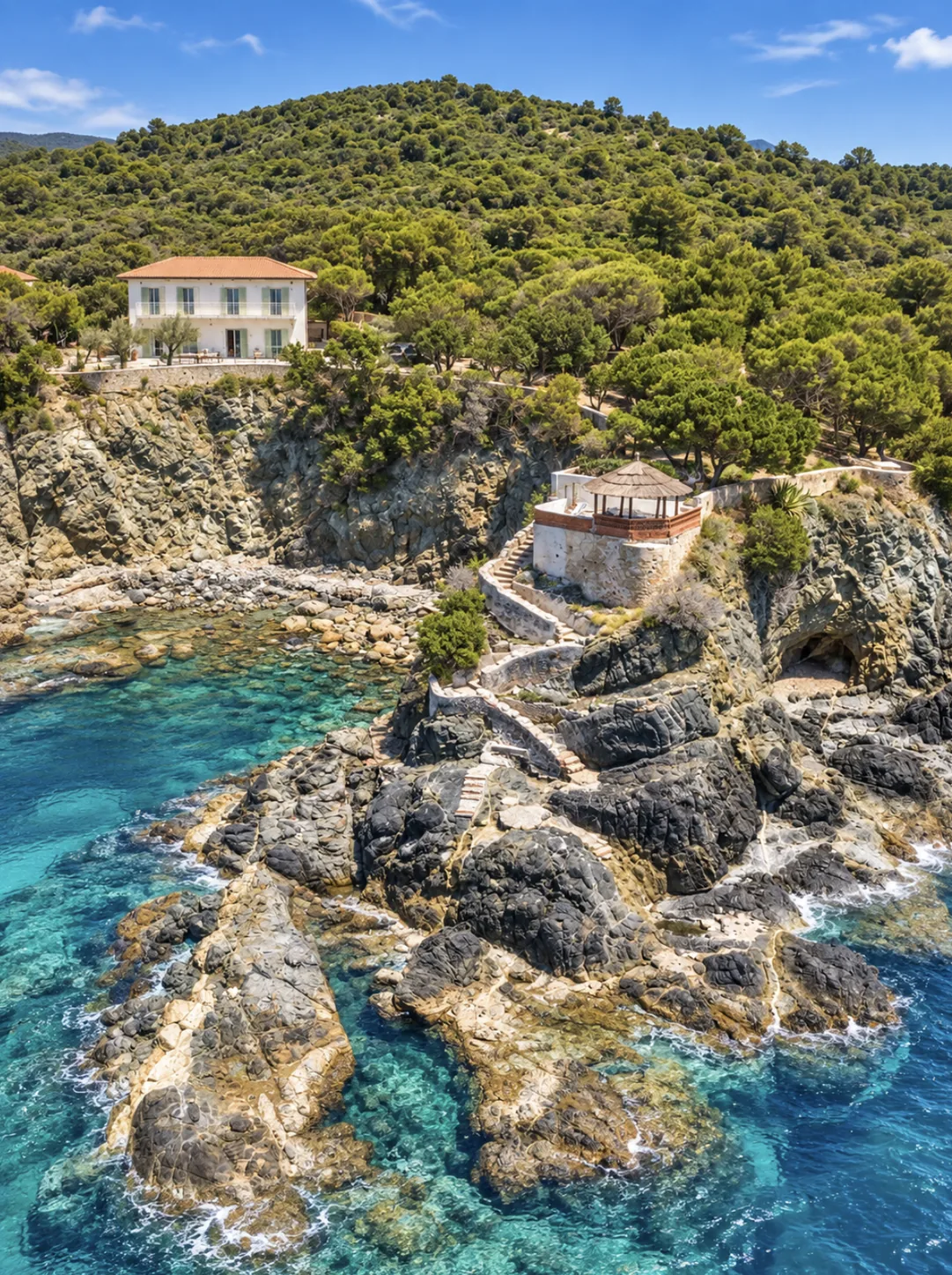
Roc Villa Bay is in Castiglioncello, on the Etruscan Riviera, not in the wine country. It is a private seafront estate with four bedrooms, three private units, more than 4,000 m² of Mediterranean garden and two private accesses to the sea. It works as a base for travellers who want one or two wine days inside a seaside holiday.
If wine is the centre of your trip, staying in Bolgheri, Bibbona or the Maremma is the simpler choice, and we say so. If the sea is the centre and wine is one of the pleasures around it, the where to stay guide explains the options. For dates at the villa, use the enquiry form.
Questions
Good to know
Which are the main wine areas of the Tuscan coast?
Bolgheri and Bibbona in the north, Suvereto and the Val di Cornia in the middle, and the Maremma in the south.
Do you list every winery?
We list the producers in the official consorzio rolls and those we have verified individually. The regional guides link to the complete directories.
How do you book a winery visit?
Directly with the estate, by email or phone. Most receive visitors by appointment and we do not sell tastings.
Is Roc Villa Bay in the wine country?
No. Roc Villa Bay is in Castiglioncello, on the Etruscan Riviera. It works as a coastal base for one or two wine days.
Stay at Roc Villa Bay
A private house
by the sea
Four bedrooms, three private units, more than 4,000 m² of Mediterranean garden and two private accesses to the sea in Castiglioncello.