
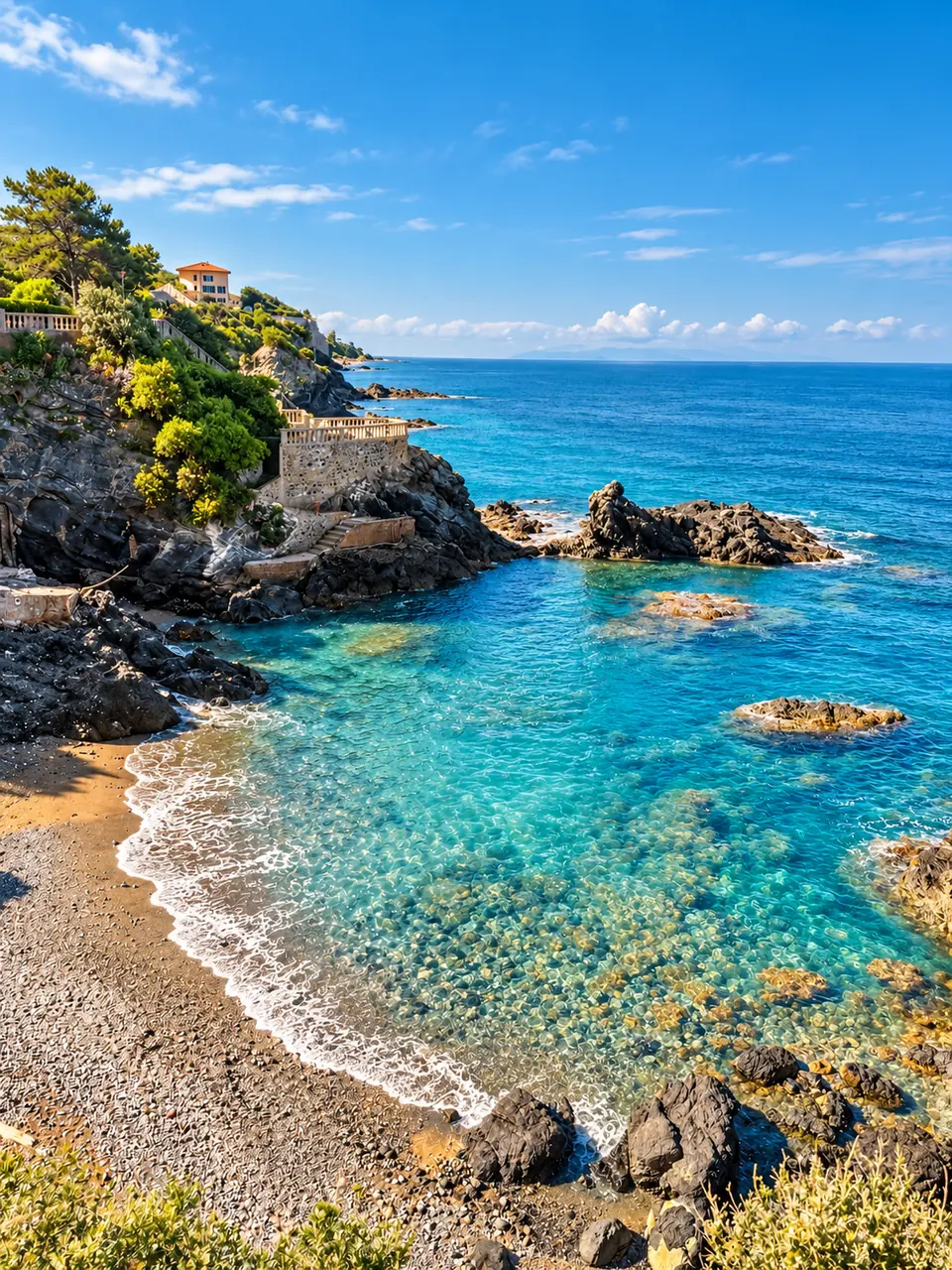
Forte dei Marmi is a beach town, and the best days here are built around the beach. But there is more than sand: the centre, the Fortino, the Pontile, the pine woods and the marble towns behind the coast. This guide suggests a few ways to spend a day or a week.
The beach
The beach is fine, golden sand, and the water is shallow for a long way out. Most of the shore is organised into beach clubs, with free areas in between. The club system is part of the local culture: you rent an umbrella and a sunbed, and the club provides changing rooms, showers and a bar. If you prefer to lie on the sand, look for the free sections.
We do not publish prices or availability. Ask at the club you like the look of, or ask your host to recommend one for your dates.
The centre and the Fortino
The Fortino is the small fort at the centre of the town, built at the wish of Grand Duke Leopold to defend the landing place. It gives the town its name. Nearby, the streets are compact and walkable, with shops, cafés and restaurants.
The Pontile is the pier from which marble was once loaded onto ships. Walk to the end and look back at the Apuan Alps: the mountains explain the town's history better than any plaque.
Pietrasanta and the marble towns
Pietrasanta is the historic art town behind the coast, known for its sculpture workshops, its marble and its contemporary art. It is a place to walk, look at studios and visit a gallery. Seravezza, further inland, has a Medici villa and a more mountainous atmosphere.
The marble quarries of the Apuan Alps are working landscapes. Some can be visited on organised tours; all of them are fragile. Go with a local guide, respect closures and do not treat the mountains as a playground.
Cycling and walking
The coastal plain is flat, and cycling is a good way to see the pine woods, the villas and the coast without sitting in traffic. The Pineta di Ponente in Viareggio and the pine woods around Forte give shade. For a longer walk, the foothills of the Apuan Alps offer a change of scale.
The walking and cycling guide covers the wider region. We do not publish route maps or distances; ask a local bike shop or guide for a route that suits your ability.
Wine and food
Forte dei Marmi is not a wine-producing comune. The nearest vineyards are inland, in the Colline Lucchesi and around Montecarlo, and further south on the coast in Bolgheri and Bibbona. The town's restaurants and enoteche pour Tuscan wine, and a day trip to a coastal estate is possible.
If you want a wine day, the Tuscan coast wineries hub is the index, and the winery visits guide explains how to book and how to handle a driver. For food, the Tuscan coast food guide is the wider map.
A day in Viareggio
Viareggio is the city on the same coast, with the Carnival, the Liberty promenade and the port. It is a different day from Forte: more urban, more layered, more animated in the evening. The Viareggio guide and the things to do in Viareggio page explain what to do there.
Where to stay
If Forte dei Marmi is the holiday, stay in the town or nearby. If you want a private house with a garden and direct access to the sea, Roc Villa Bay is in Castiglioncello, further south on the same coast. The Forte dei Marmi guide explains the difference; the where to stay guide compares the bases.
For Roc Villa Bay, start with the villa page or the enquiry form.
Questions
Good to know
What is there to do in Forte dei Marmi besides the beach?
The Fortino, the Pontile, the centre, the pine woods, Pietrasanta and the marble towns, and the Apuan Alps behind the coast.
Do you need to book a beach club?
In July and August, yes, especially at weekends. Outside high season you can often walk in.
Is Forte dei Marmi good for cycling?
Yes. The coastal plain is flat and the pine woods give shade, which makes cycling a practical way to see the area.
Where is Roc Villa Bay?
In Castiglioncello, in the province of Livorno, on a different stretch of the same coast.
Stay at Roc Villa Bay
A private house
by the sea
Four bedrooms, three private units, more than 4,000 m² of Mediterranean garden and two private accesses to the sea in Castiglioncello.